College of Science Holds a Training Course on the Psychology of Digital Deception and Protection from Social Engineering and Smart Disinformation, Through the Continuing Education Division and the Guidance Unit
College of Science Holds a Training Course on the Psychology of Digital Deception and Protection from Social Engineering and Smart Disinformation, Through the Continuing Education Division and the Guidance Unit
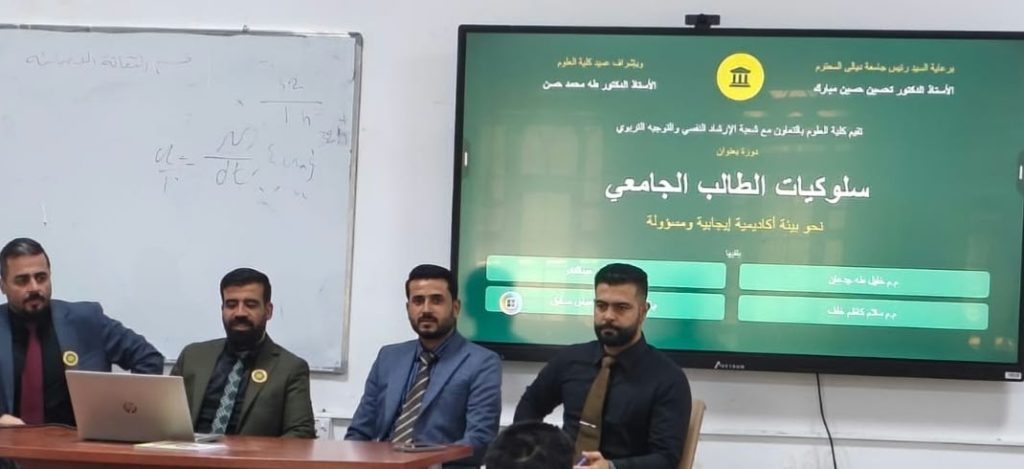
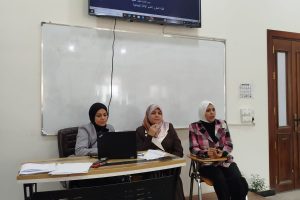
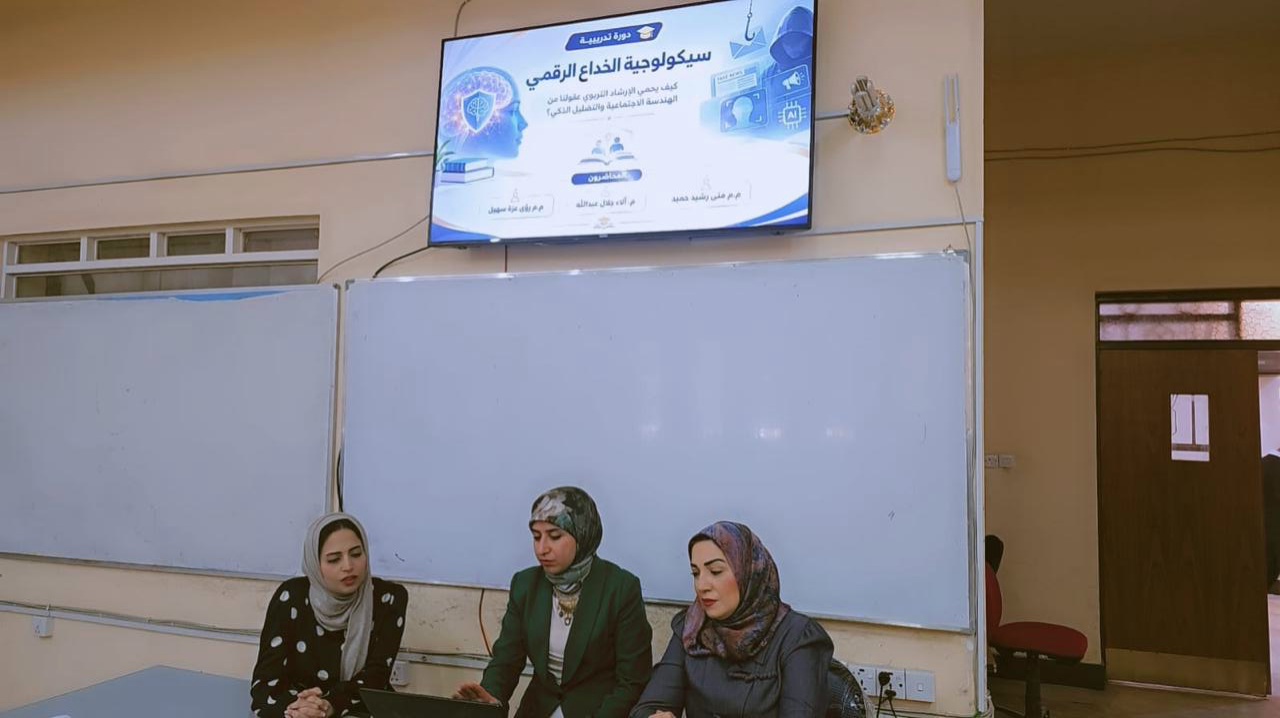
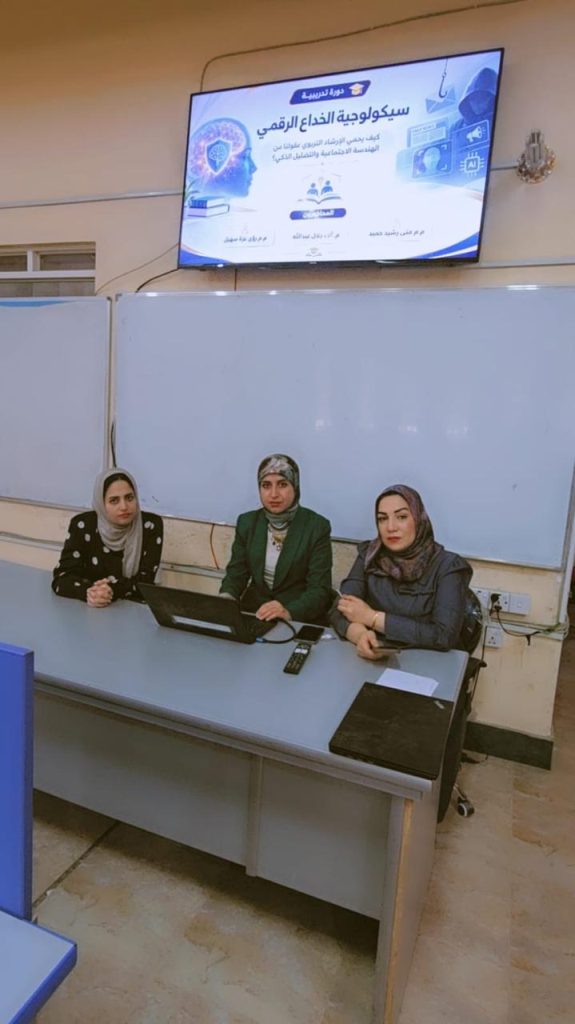
The Continuing Education Division, in cooperation with the Guidance Unit at the College of Science, University of Diyala, organized a training course entitled “The Psychology of Digital Deception: How Does Educational Guidance Protect Our Minds from Social Engineering and Smart Disinformation?”, presented by Asst. Lect. Muna Rasheed Hameed, Lect. Alaa Jalal Abdullah and Asst. Lect. Ruaa Izza Suhail.
Course Objectives
The course aimed to explain that digital deception does not target devices and systems alone, but focuses on exploiting trust, attention, emotions and natural human mechanisms; a breach may begin with a message, but it succeeds through a human decision. It also showed that falling for deception does not mean a lack of intelligence, but is linked to mental shortcuts, time pressure, feelings of fear and curiosity, and familiarity with the source.
Tools of Digital Deception and Keys of Influence
The course addressed the main tools and keys of influence used in digital deception, including social engineering methods such as phishing, impersonation, and fraud through messages and calls that rely on building trust or creating urgency; psychological influence keys such as exploiting authority, fear, curiosity, reward and social proof; as well as the risks of smart disinformation and of artificial intelligence and deepfake technologies in producing convincing texts, images and voices, which make a realistic appearance alone insufficient to prove the truth.
Prevention and the Role of Educational Guidance
The lecturers stressed the importance of confronting these risks by verifying the source and context and comparing with independent sources, and by applying the rule “Stop — Verify — Then Decide or Share”, while highlighting the individual, social and educational effects of digital deception. The course also reviewed the pivotal role of educational guidance in raising awareness, strengthening critical thinking and psychological resilience, and providing a safe environment for reporting and seeking help without blame. It stressed that building digital immunity combines knowledge, skill and behavioral balance, and that sustainable prevention requires continuous training and an integrated role for the family and the educational institution to protect the mind as well as the devices.
Sustainable Development Goals
The course is in line with the Sustainable Development Goals, particularly Goal 4 (Quality Education), by promoting digital awareness, developing critical thinking skills and building a safe and aware university environment.
Photos
Click any photo to view it full sizeRelated news
All news ‹ College of Science Holds a Training Course on Academic Responsibility and Building the University Personality
 Department of Forensic Evidence Holds a Scientific Seminar on Safety and Biosafety in Forensic Laboratories
 Department of Mathematics Holds a Training Course on Using Maple for Modeling and Solving Mathematical Problems