Department of Mathematics Holds a Training Course on Using Maple for Modeling and Solving Mathematical Problems
Department of Mathematics Holds a Training Course on Using Maple for Modeling and Solving Mathematical Problems
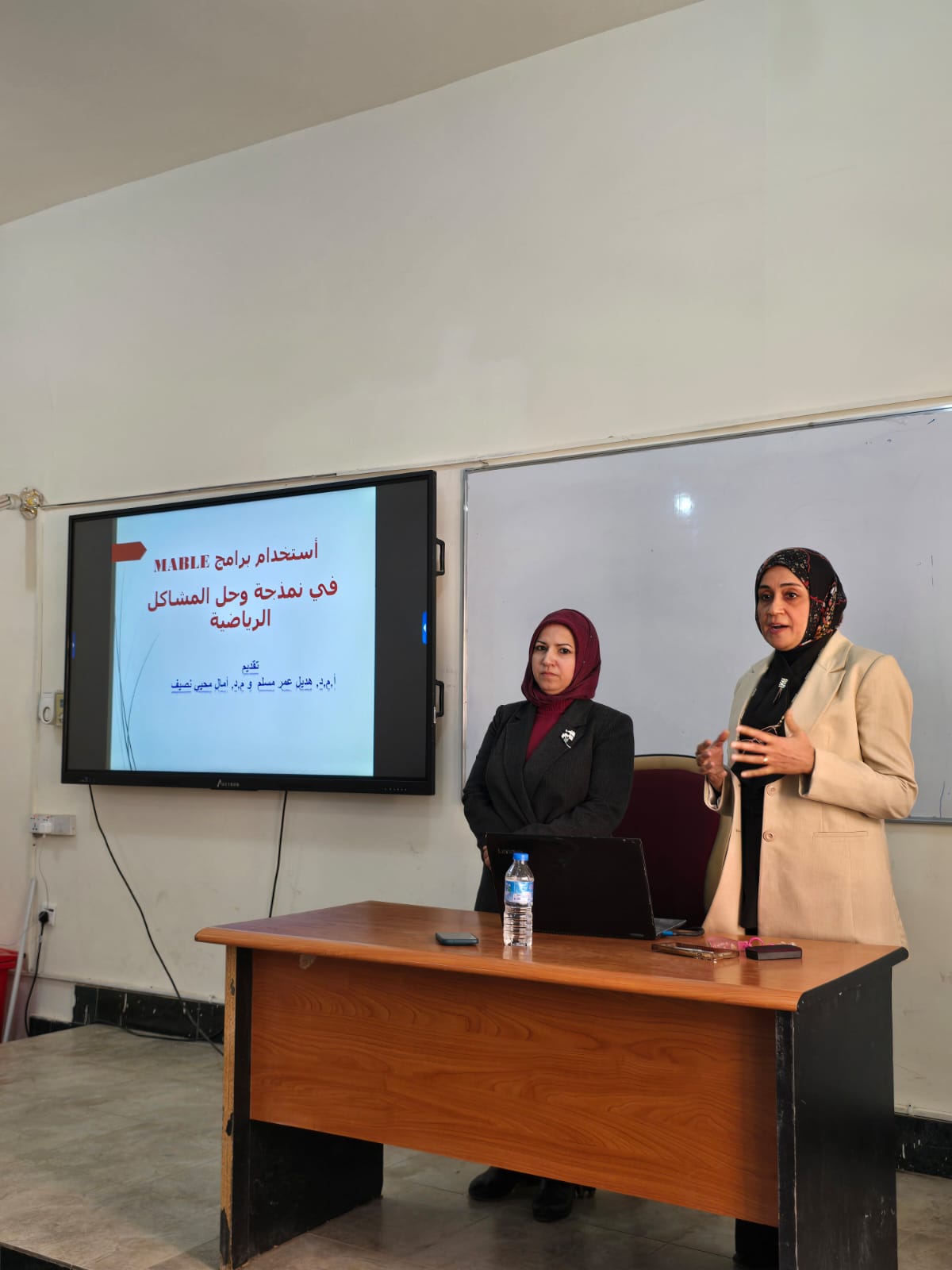
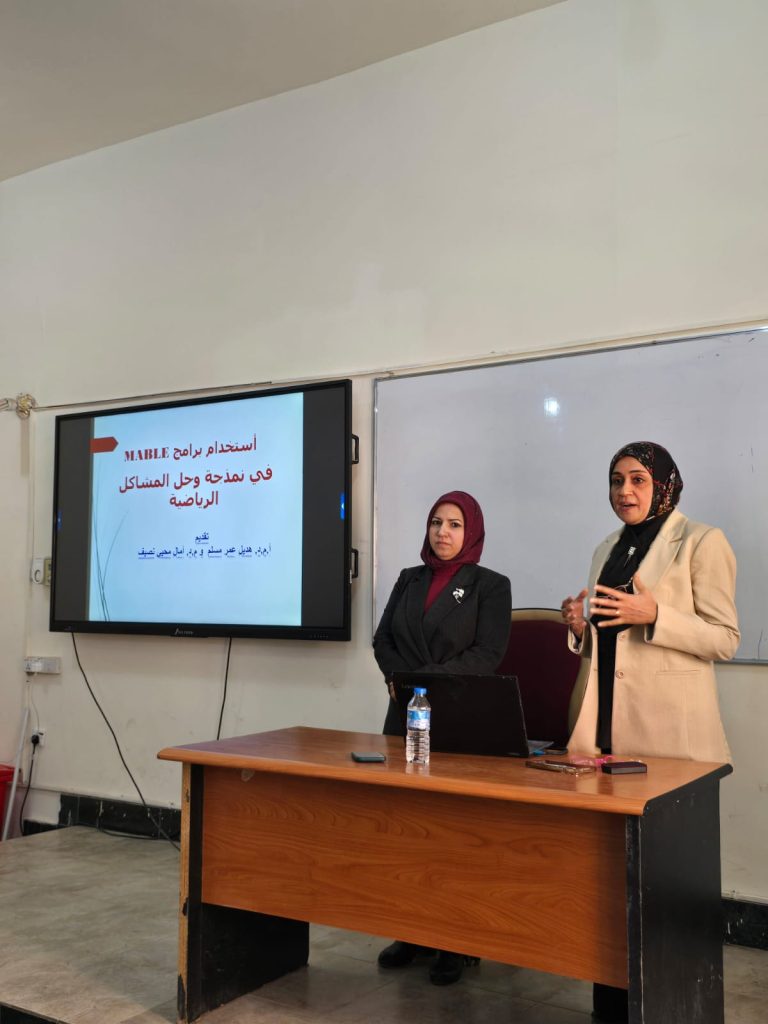
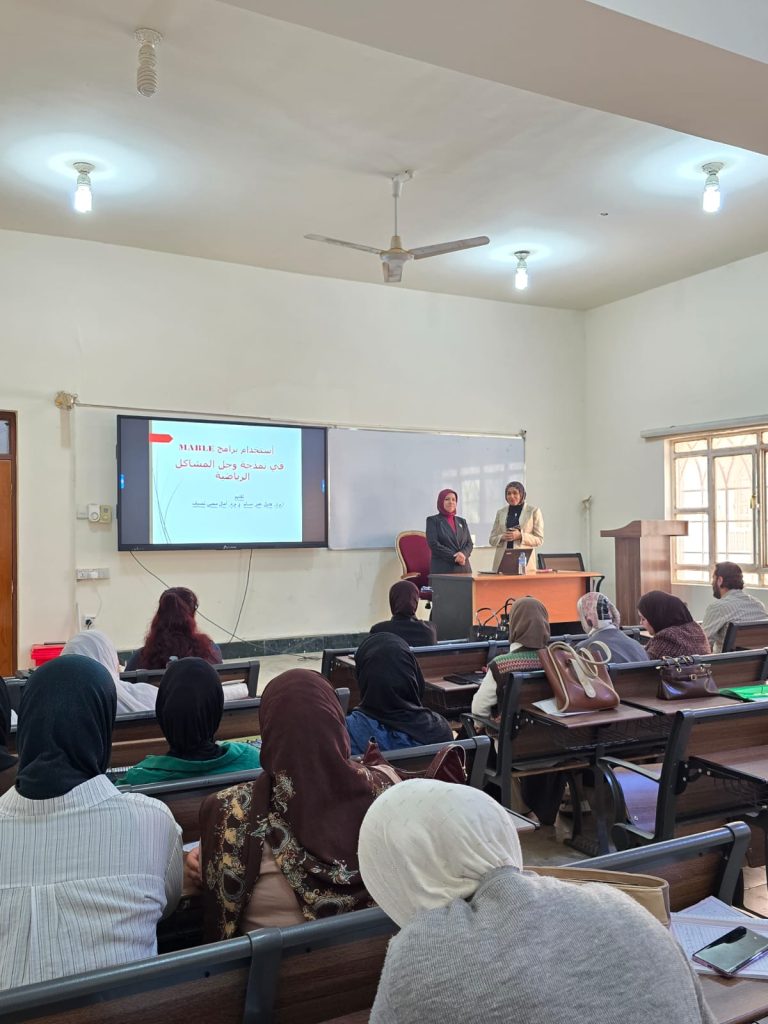
The Department of Mathematics at the College of Science, University of Diyala, held a training course entitled “Using Maple for Modeling and Solving Mathematical Problems”, which aimed to introduce the program’s capabilities and its importance in supporting mathematical and computational applications and in using computer techniques to deal with mathematical problems.
Introducing Maple
The course introduced Maple as one of the specialized mathematical software programs, and the capabilities it provides for performing symbolic and numerical mathematical operations and solving differential and integral equations, as well as its use in modeling and analyzing mathematical problems and finding suitable solutions for them.
Mathematical Commands and Graphing
The course also explained how to write and execute mathematical commands and use them to handle various problems, along with methods for graphing simple and complex mathematical functions and displaying several functions in one graph in different colors, which helps in studying their behavior, analyzing their properties and comparing them.
Sustainable Development Goals
The course contributes to Goal 4 of the Sustainable Development Goals (Quality Education), by developing participants’ digital and computing skills and promoting the use of modern mathematical software in education and scientific research.
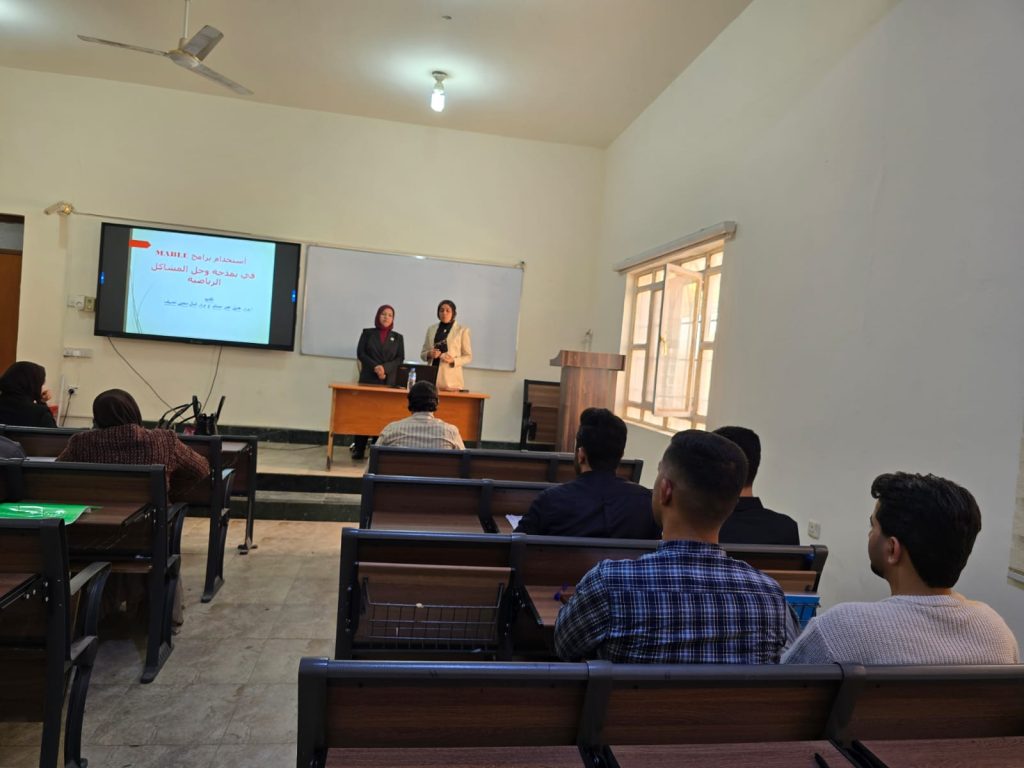
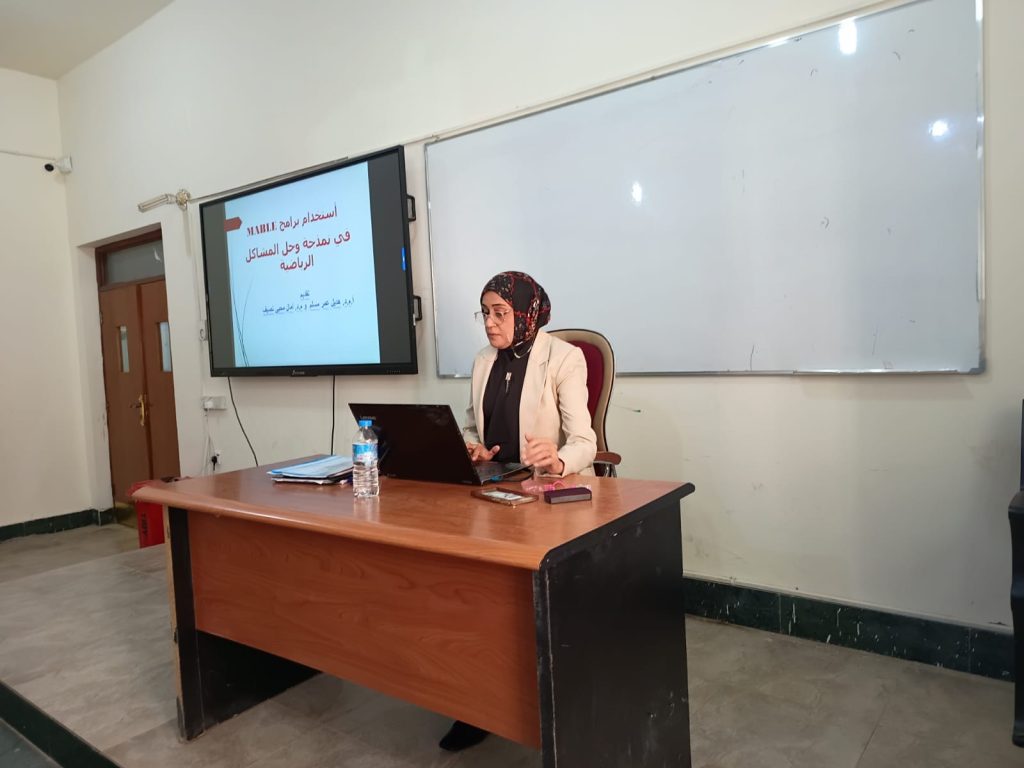
Photos
Click any photo to view it full sizeRelated news
All news ‹ College of Science Holds a Training Course on Academic Responsibility and Building the University Personality
 College of Science Holds a Training Course on Positive University Behavior and Promoting a Culture of Responsibility among Students
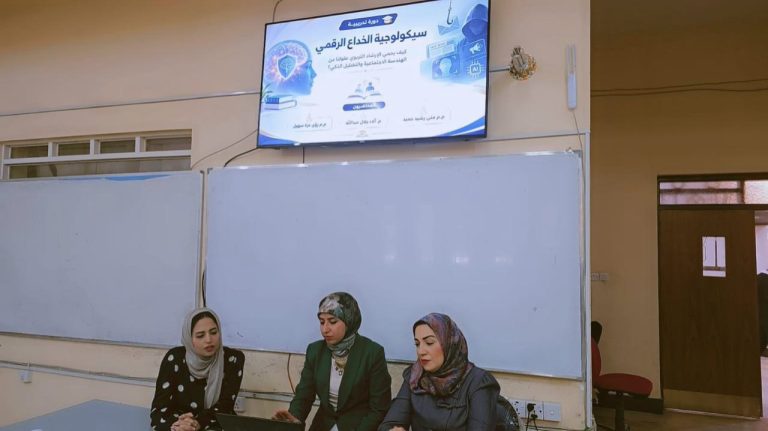 College of Science Holds a Training Course on the Psychology of Digital Deception and Protection from Social Engineering and Smart Disinformation, Through the Continuing Education Division and the Guidance Unit