Department of Mathematics at the College of Science Organizes Scientific Seminar on Exam Anxiety in Cooperation with the Educational Guidance Unit
Department of Mathematics at the College of Science Organizes Scientific Seminar on Exam Anxiety in Cooperation with the Educational Guidance Unit
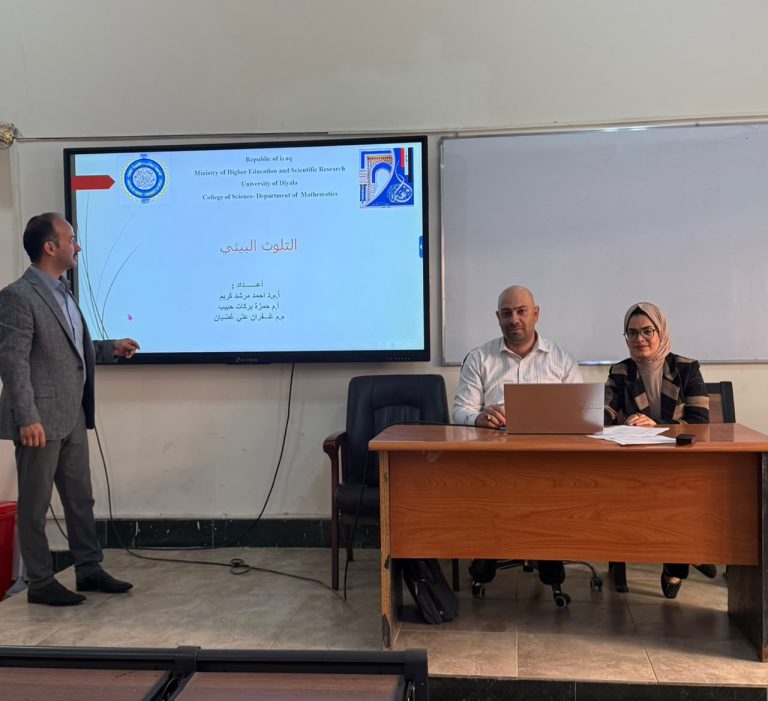
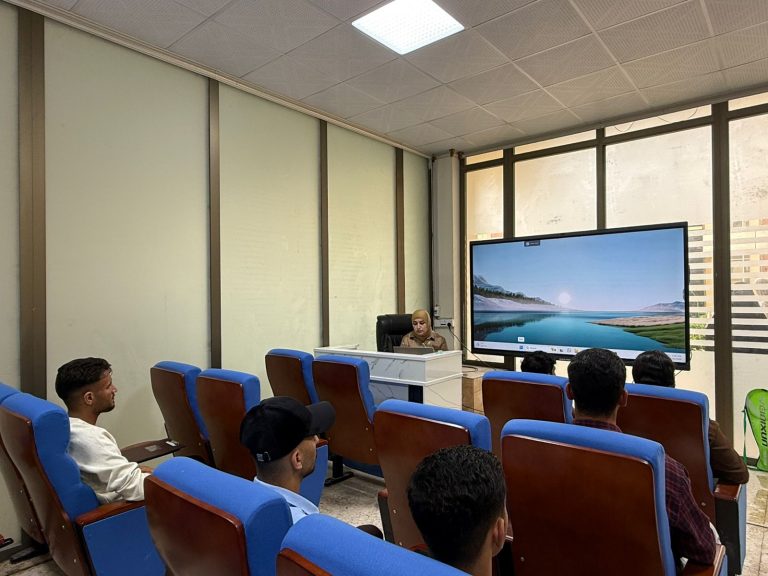
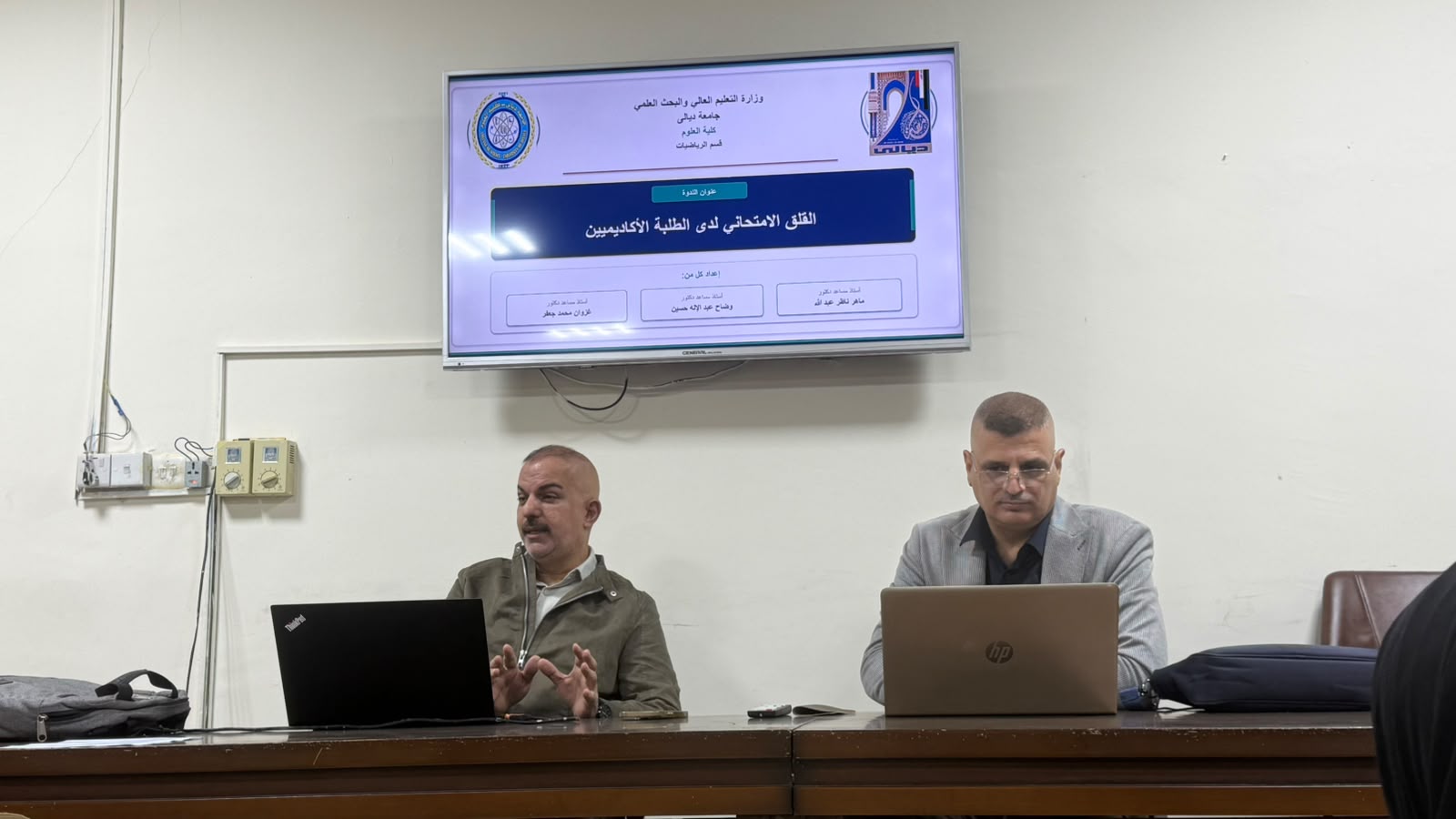
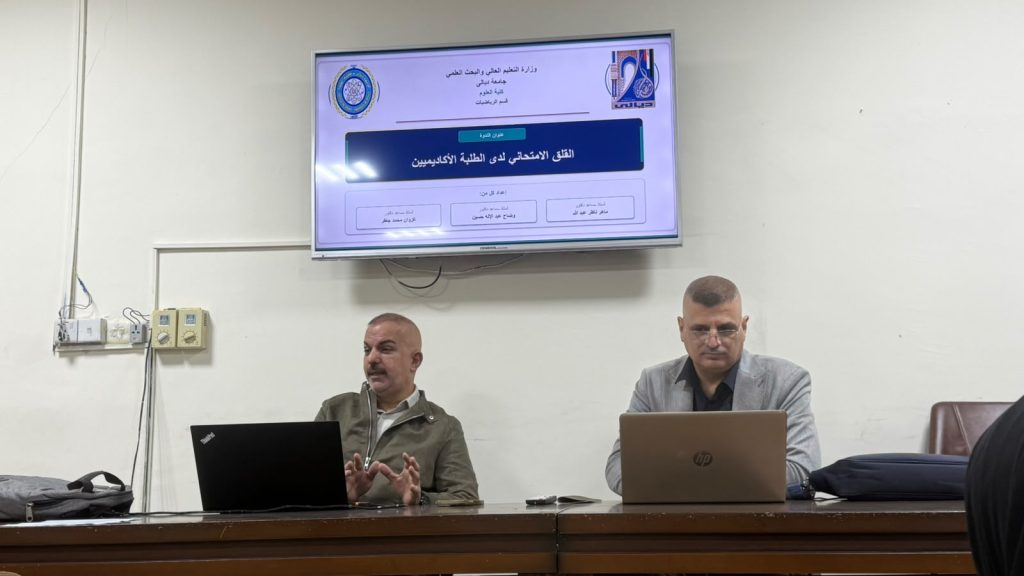
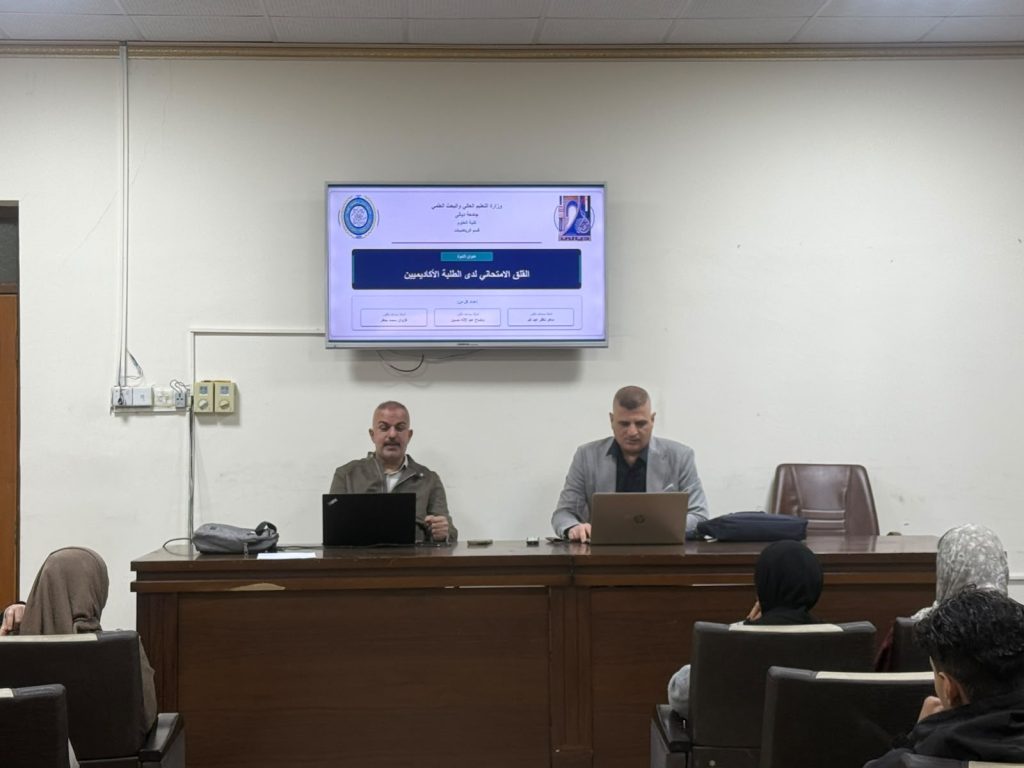
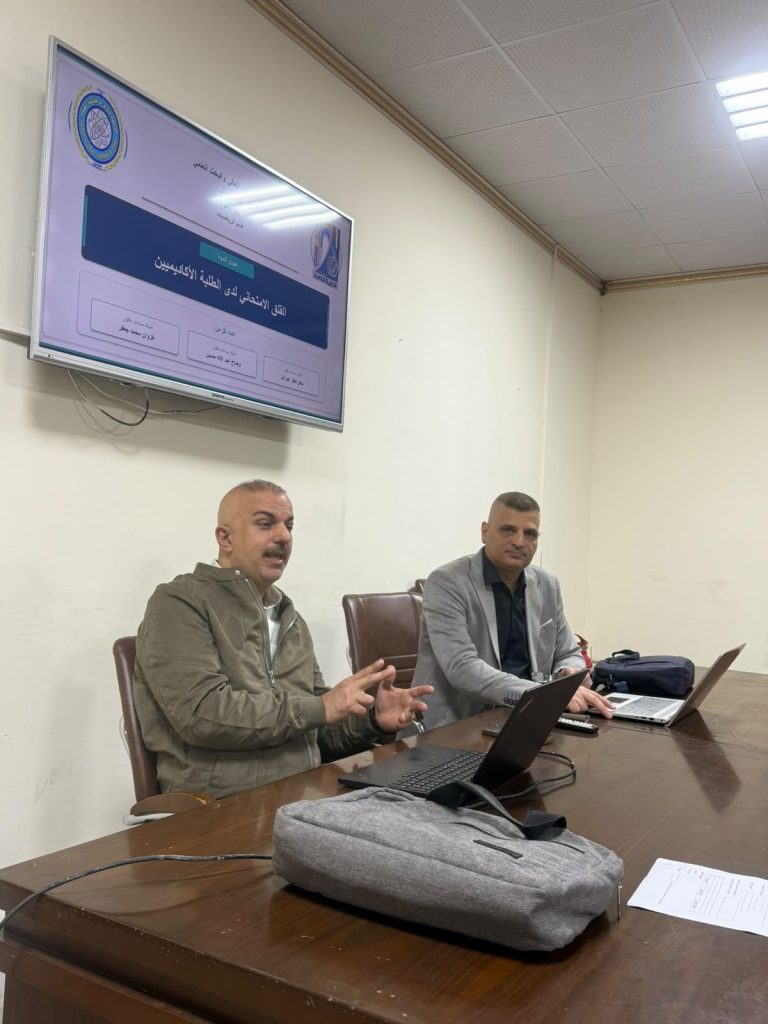
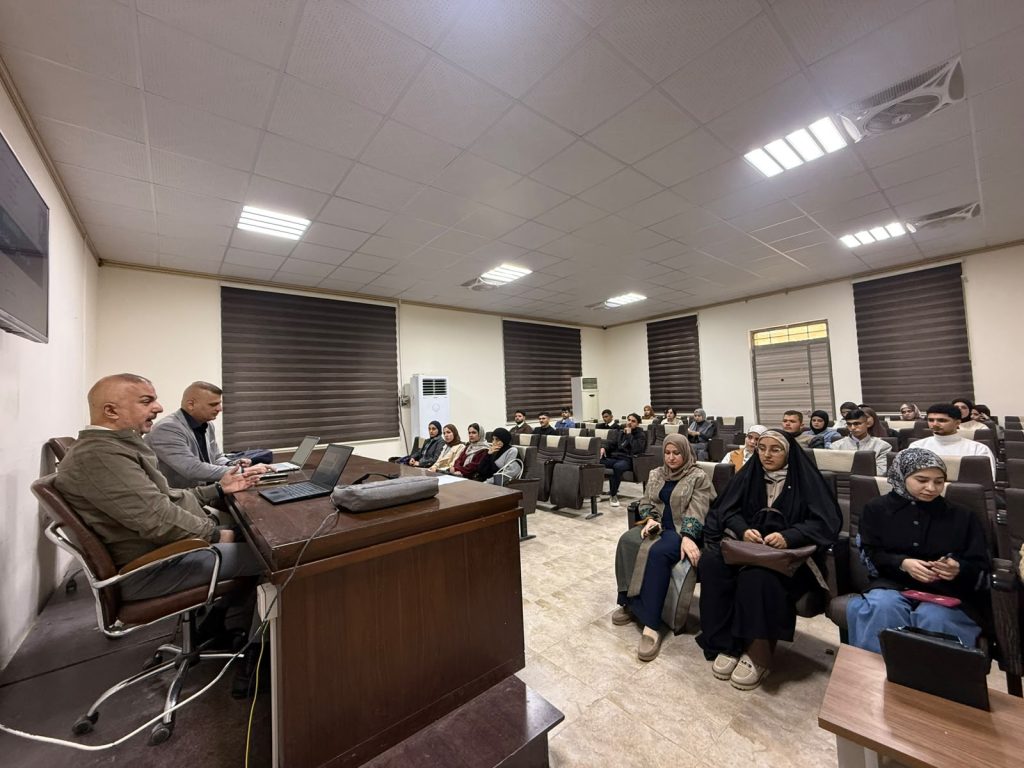
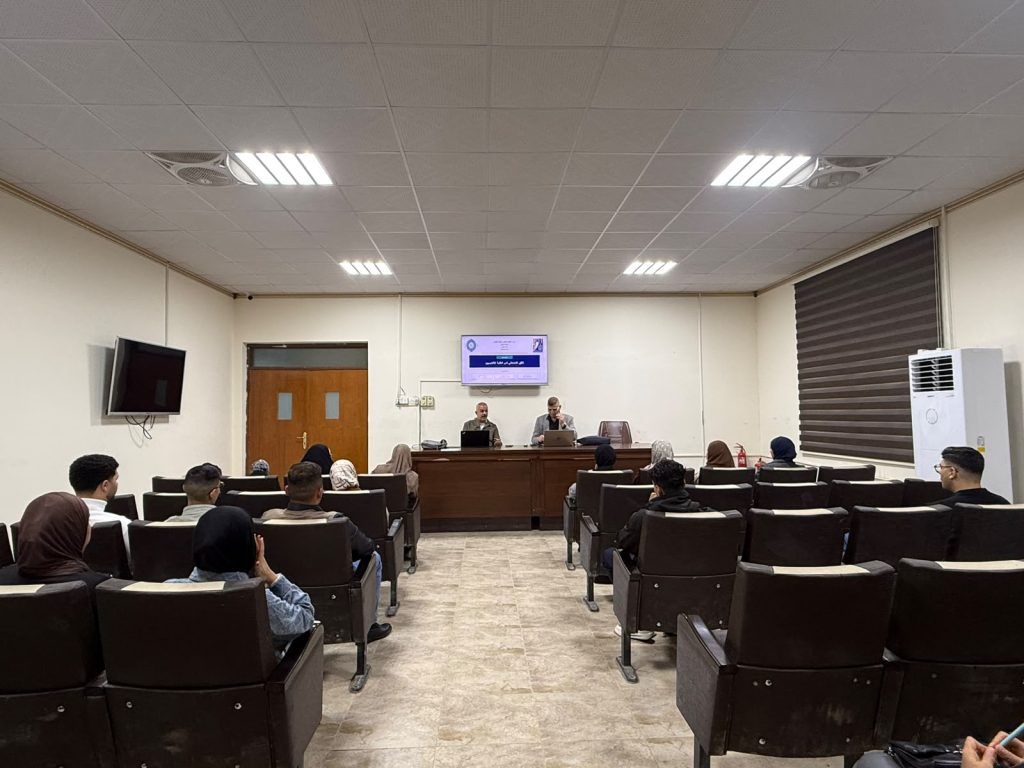
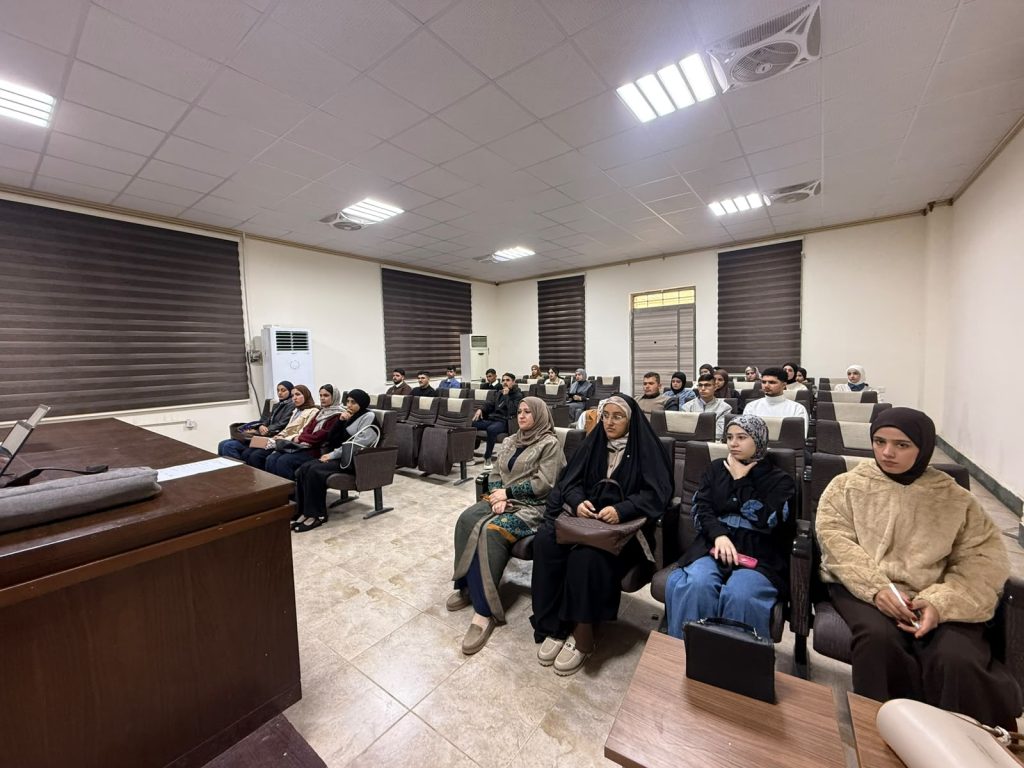
The Department of Mathematics at the College of Science, University of Diyala, in cooperation with the Educational Guidance Unit, organized a scientific seminar entitled “Exam Anxiety”, presented by Asst. Prof. Dr. Maher Nazer Abdullah, Asst. Prof. Dr. Waddah Abdul-Ilah Hussein and Asst. Prof. Dr. Ghazwan Mohammed Jaafar.
Seminar Objectives
The seminar aimed to shed light on exam anxiety among university students as one of the psychological and behavioural challenges that may affect concentration, academic achievement and performance during tests, and to introduce its main causes related to psychological pressure, family expectations and the nature of the university environment.
Seminar Topics
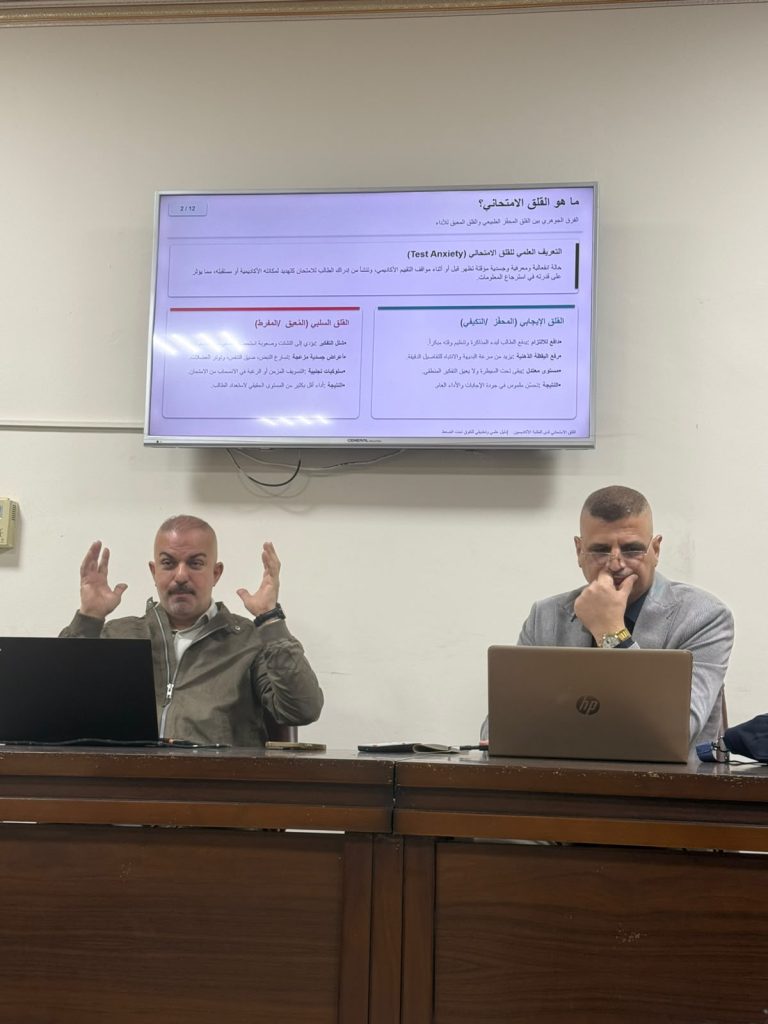
The seminar addressed the differences between moderate anxiety, which acts as a positive drive for achievement, and excessive anxiety, which hinders mental performance and negatively affects students’ results. It also stressed the importance of planning study early, managing time, and using relaxation and deep-breathing techniques to reduce stress and build self-confidence.
Discussions and Recommendations
The seminar included discussions and scientific contributions on the main problems students face during the exam period and how to deal with them, highlighting the active role of psychological, educational and academic counselling in providing students with the support they need to overcome exam pressure. The seminar concluded with recommendations stressing the need to raise awareness of mental health within the university environment and to encourage students to adopt sound study and psychological habits that contribute to psychological balance and academic success.
Sustainable Development Goals
This seminar is in line with the Sustainable Development Goals, particularly Goal 3 (Good Health and Well-being) and Goal 4 (Quality Education), by supporting students’ mental health and creating a learning environment that encourages achievement and excellence.
Photos
Click any photo to view it full sizeRelated news
All news ‹